Common Materials for Caskets
Caskets can be made from the following casket materials. Each one will affect durability and cost.
Metal Caskets
Metal caskets are known for their physical durability. A steel casket is commonly measured by its gauge, with 18-gauge steel representing a durable, mid-range option. Higher-end metal caskets include copper and bronze, both non-rusting materials that offer lasting protection.
Wood Caskets
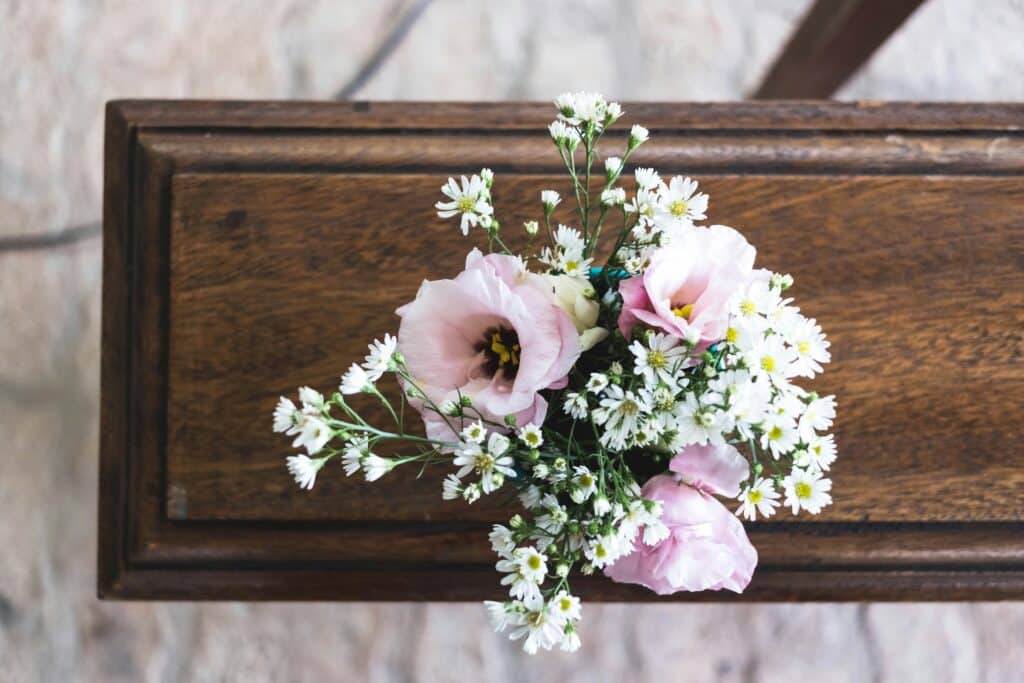
Wood caskets are a natural and warmer choice. Varieties include solid-wood caskets and hardwood options, such as a mahogany casket, known for its fine grain and durability. Other common wooden casket choices are oak, cherry, and poplar. A pine casket is also available for a simpler, lighter wood look.
Biodegradable Caskets
A biodegradable casket is a green burial alternative for those seeking to minimize environmental impact. These eco-friendly caskets decompose naturally when placed in the earth, which supports the principles of green burial practices. They are usually made from materials like bamboo, willow, or heavy-duty cardboard.
Common Casket Styles
Each casket style depends on its intended purpose. In this table, you can see the main differences between a burial casket and a cremation casket.
| Style | Main Features | Considerations |
| Burial casket | Non-gasketed and gasketed caskets with seals designed to resist external elements | Focused on protection and long-term durability |
| Cremation casket | Constructed from natural or engineered wood, with minimal metal parts | Designed to be used for a funeral service prior to cremation (as opposed to an alternative container), but can be incinerated. |
| Alternative containers | Typically, basic cardboard construction | Typically used for direct cremation with no service beforehand |
Additional casket styles include the half couch casket, which features a divided lid for viewings, and oversized caskets designed to accommodate larger individuals.
IMPORTANT NOTE: Be sure to confirm the intended use with the funeral home you’re working with so that the chosen model meets facility requirements. This helps avoid issues related to equipment compatibility or environmental regulations.
Cost of a Casket
Casket prices are based on construction materials, interior fabric, and craftsmanship. A functional, entry-level model might start at approximately $1,000. However, the cost of a premium casket made from bronze or exotic hardwoods can exceed $10,000.
Even though caskets are often considered one of the largest single items on a funeral invoice, they are separate from other funeral costs. Many funeral homes provide itemized price lists, so it’s a good idea to compare before committing.
Renting vs. Buying a Casket
Many funeral homes offer a rental cremation casket. In this arrangement, their loved one is placed into an alternative container that slides into a wooden or metal rental casket for the service. For the cremation, the alternative container holding the deceased is removed and placed into the cremation chamber.
Under the FTC’s funeral rule, families have the right to purchase a third-party casket. This means that you are not restricted to buying a vessel directly from a funeral home. You may purchase from an online retailer or local showroom and have it delivered to the facility. No funeral home may charge additional fees if the casket is provided by the responsible party/ third party.
How to Choose the Right Casket for Your Loved One
The process of selecting the right casket can feel clearer when you focus on three practical details: the planned disposition (burial or cremation), a comfortable budget, and the material and style that could best honor your loved one.
Step 1: Identify the Final Disposition Method
Confirm with your funeral home if the arrangement is for burial or cremation. If you are planning a burial, you will generally need a burial casket built to withstand the elements over time. A burial vault or grave liner is also required by most cemeteries to protect the casket. For cremation, you will want an alternative container or cremation casket
Step 2: Establish a Budget
It helps to determine a comfortable budget before you start looking at casket options. Casket prices will vary depending on the materials, interior details, and overall craftsmanship. Setting that limit early lets you focus only on what works for you, avoiding the stress of too many choices.
Step 3: Evaluate Casket Material and Preferred Look
Once you have those first two steps sorted out, you can start thinking about the design that best reflects the person you are honoring. You might prefer the classic look of a traditional casket in oak or mahogany, the solid strength of a metal option, or even a sustainable, biodegradable design.
Frequently Asked Questions About Caskets
What Is the Difference Between a Casket and a Coffin?
The terms casket and coffin are often used interchangeably. However, there are clear differences in their shapes and builds.
| Caskets | Coffins |
| • Rectangular
• Generally feature a split-lid design, which allows for the upper portion to stay open during viewings • Rectangular caskets are the standard in the U.S. |
• Typically hexagonal or anthropomorphic in shape, tapering at the shoulders and narrowing toward the feet
• Has historically required less material • Commonly chosen for a traditional burial aesthetic • More prevalent in regions outside the U.S. |
What Is a Green or Biodegradable Casket?
Green or biodegradable caskets are eco-friendly options made from sustainable materials such as woven seagrass, bamboo, or willow, designed to decompose naturally in the earth. These can often be chosen as cremation caskets as well. Choosing a green or biodegradable casket minimizes environmental impact by avoiding non-biodegradable synthetic liners or metal components.
What Size Casket Do I Need?
The size of the casket you’ll likely need depends on the person being buried. If it is an adult, there is a standard adult size that accommodates most. However, smaller and oversized caskets are available to accommodate a range of dimensions. Your funeral director at funeral homes like Hollywood Forever can provide specific measurements to ensure the vessel fits your loved one properly and fits within existing cemetery plots, crypts, or crematoriums.
Selecting the Right Casket for Your Loved One
A casket is simply one part of saying goodbye. When its style, material, and cost feel in harmony with the service you are planning, and with the person you wish to honor, the decision may rest gently in the background, allowing you to focus on the stories, music, and moments that matter most. A funeral director can help walk you through any remaining details, from cemetery requirements to viewing arrangements, so each choice along the way feels clear and manageable.
If you are planning a service in Los Angeles, Hollywood Forever may support you further with a range of casket options, guidance on local regulations, and thoughtful spaces for gathering. Our team is always available to answer questions and help ensure every element of the farewell aligns with your family’s wishes. Contact us today.