What Is a Visitation?
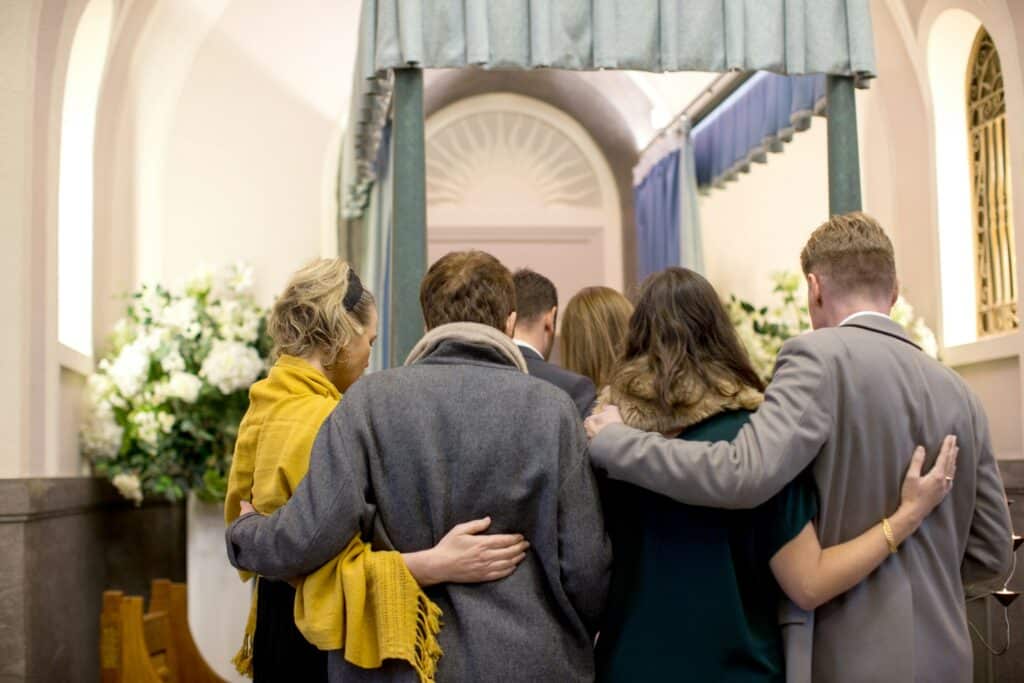
A funeral visitation is typically an informal gathering that gives relatives, friends, coworkers, neighbors, and other members of the community an opportunity to offer their condolences to the family of the person who has passed away.
Here are three defining features of a visitation:
- Visitations are normally held at a funeral home, although they may also take place in a church, chapel, or another location chosen by the family.
- It usually takes place during the afternoon or evening before the funeral. However, some families hold it on the morning of the funeral instead.
- The person who has passed away may be present in a casket that may be open or closed. If the family has chosen cremation, they typically display an urn or photographs instead.
Visitation periods tend to last longer than funeral services. A family might schedule a visitation for a few hours (typically between 2 and 4 hours) so that guests can arrive at different times. Guests don’t need to stay for the entire funeral visitation period.
What to Expect at a Visitation
When guests arrive at a visitation, they may sign a guest book before greeting family members. There may be flowers, keepsakes, memory boards, or other displays representing different parts of the person’s life.
Visitations are usually quieter and less structured than a funeral. People may talk with one another, share memories, hug family members, or spend a few moments near the casket or memorial display.
Refreshments are optional at a visitation and usually limited to light snacks or beverages.
Visitation vs. Viewing vs. Wake
The terms visitation, viewing, and wake are sometimes used interchangeably, but they have different meanings.
A visitation focuses primarily on comforting the family, and it can be held with or without your loved one present, in an open or closed casket.
A viewing offers an opportunity for guests to see the person who has passed away. For this reason, the body is normally present, and the casket is typically open.
A wake can look a lot like either a visitation or viewing, but the term has stronger religious and cultural associations. Wakes are particularly connected with Catholic traditions and Irish funeral customs. However, families from many backgrounds now use the term.
What Is a Funeral Service?
A funeral service is a formal and structured ceremony that honors the life of a person who has passed. It allows family members and friends to mourn together through a set of rituals.
Here are three defining features of a funeral service.
- Funeral services are normally held at a funeral home, a church, a chapel, or another location chosen by the family.
- A member of the clergy, celebrant, funeral director, family member, or another person chosen by the family may lead it.
- The casket may be present during a funeral, but this is not always the case. Families who have chosen cremation may instead have an urn present, while some memorial services take place without the deceased’s remains in the room.
Many funeral services last approximately 30 to 60 minutes, although religious customs and the family’s wishes can make them shorter or significantly longer.
After the funeral, guests usually proceed to a cemetery for burial or interment. If cremation has been chosen, the disposition of the cremated remains may happen separately.
Visitation vs. Funeral: What Are the Key Differences?
While a visitation provides an informal time for family and friends to gather and offer support, a funeral is a structured ceremony dedicated to honoring a loved one.
The table below highlights more differences between the two.
| Visitation | Funeral Service | |
| Purpose | Pay respects and support the family | Formal service honoring the person’s life |
| When | Usually the day or evening before | On the scheduled service day |
| Where | Funeral home, church, or chapel | Chapel, church, funeral home, or graveside |
| Formality | Informal, guests come and go | Formal, with a set beginning and end |
| Casket present | Usually, either open or closed | Often, though not always |
| Typical length | Two to four hours | Thirty to sixty minutes |
| What guests do | Greet family, offer condolences, view displays | Sit, listen, pray, sing, or participate in readings |
| Dress | Respectful, often somewhat less formal | Traditionally more formal and subdued |
For some people, the visitation provides the best chance for a personal goodbye. There’s time to speak directly with the family and connect with them.
Others may prefer the structure and shared rituals of the funeral itself.
Funeral Visitation Etiquette
If you’ve never attended a visitation, the informality can actually create uncertainty. Since there is no formal program, these few simple tips can help.
What to Wear to a Visitation
Visitation guests should choose clothing that is respectful and relatively subdued.
Wearing black is not required unless family, religious, or cultural customs say otherwise. Dark or neutral clothing is common, but a simple dress, blouse and trousers, button-down shirt, sweater, or similar smart-casual clothing is appropriate.
How Long You Should Stay at a Visitation
Visitation guests normally don’t need to remain for the full visitation time slot.
Around 30 minutes may be enough for a guest to sign the guest book, greet the family, pay respects, and look at any photographs or memorial displays. If a guest is particularly close to the person who has passed away or close to their family, they may naturally want to stay longer.
What to Say to the Family and What to Avoid
Funeral visitation guests don’t need to find the perfect words.
Simple statements such as, “I’m so sorry for your loss,” “I’m thinking of you,” or, “I was very lucky to know her,” can be enough. It can also be comforting if a guest shares a brief, positive memory about the person who has passed.
Should You Bring Flowers, Food, or a Sympathy Card?
Visitation guests aren’t usually required to bring anything.
Some guests send funeral flowers to the funeral home or family beforehand. Others bring or mail a sympathy card to share a longer personal message.
Food may be appropriate when a guest is close to the family and if certain food is customary within the family’s culture. It’s best to ask before bringing food directly to the visitation.
Can Children Attend a Visitation?
Children can attend a visitation. It’s good to prepare children beforehand by explaining what they will see using simple, direct language.
Do You Need Both a Visitation and a Funeral?
No. You don’t need both a visitation and a funeral. A family can choose to have a visitation, a funeral, both, or neither.
Having both may be helpful if many people want to offer condolences. The visitation allows guests to speak personally with the family. A funeral creates a separate space for ceremony and ritual.
A visitation without a traditional funeral might be better for a family who prefers an informal gathering where people can share memories without holding a formal ceremony afterward.
A funeral without a visitation may be better for families who want privacy before the service or those who don’t want an open or closed casket gathering beforehand.
A celebration of life is another option. They can be highly personalized and may take place days, weeks, or even months after.
Frequently Asked Questions About a Visitation and a Funeral
Is the body present at a visitation?
Yes, a body is often present at a visitation. The loved one may be present in either an open or closed casket. However, a body does not have to be present for a family to hold a visitation.
After cremation, families may display an urn, photographs, flowers, or personal belongings instead.
How long does a visitation last?
Many visitations are scheduled for approximately two to four hours. Guests are generally free to arrive and leave during that time frame rather than staying for the entire gathering.
Is there a cost to hold a visitation?
Yes, there is typically a cost to hold a visitation. Since it requires a physical space and specialized staff, funeral homes charge specific fees for these services.
Do you have to attend both the visitation and the funeral?
No, you don’t have to attend both the visitation and the funeral. If you’re invited or the services are public, you may attend the visitation, the funeral, or both.
If you were especially close to the person who has passed or close to their immediate family, attending both can be meaningful, but it is not an obligation. When schedules or circumstances make it difficult, attending either service is still a way to show love and care.
Planning a Visitation or Funeral at Hollywood Forever
Hollywood Forever offers families the flexibility to create funeral and memorial arrangements suited to the traditions and character of the gathering.
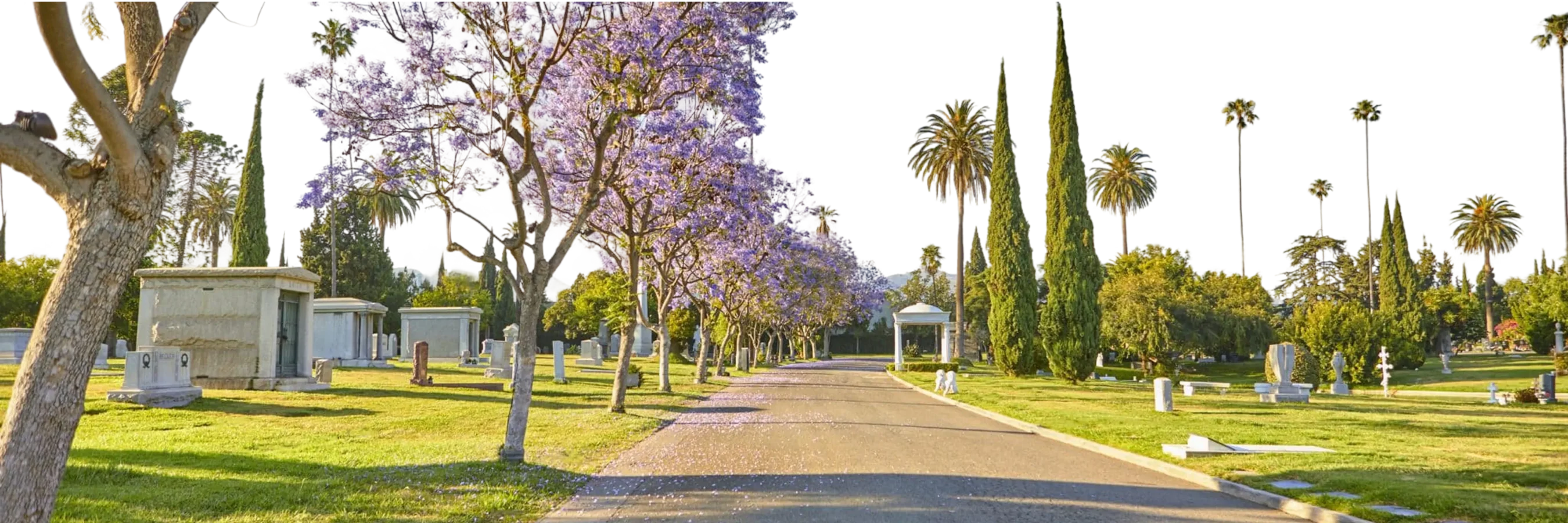
Visitation or funeral services can be held in indoor and outdoor spaces throughout the property. The historic Masonic Lodge provides a distinctive indoor setting for memorial services. The Hollywood Forever Chapel offers both visitation and funeral service options, accented by natural light and an outdoor garden patio. Families looking for an outdoor setting can gather beside the Fairbanks Reflecting Pool. For Jewish families, Beth Olam offers a rich heritage, having served the Southern California community for nearly a century.
Contact Hollywood Forever to learn more about available ceremony spaces and arrangements.