
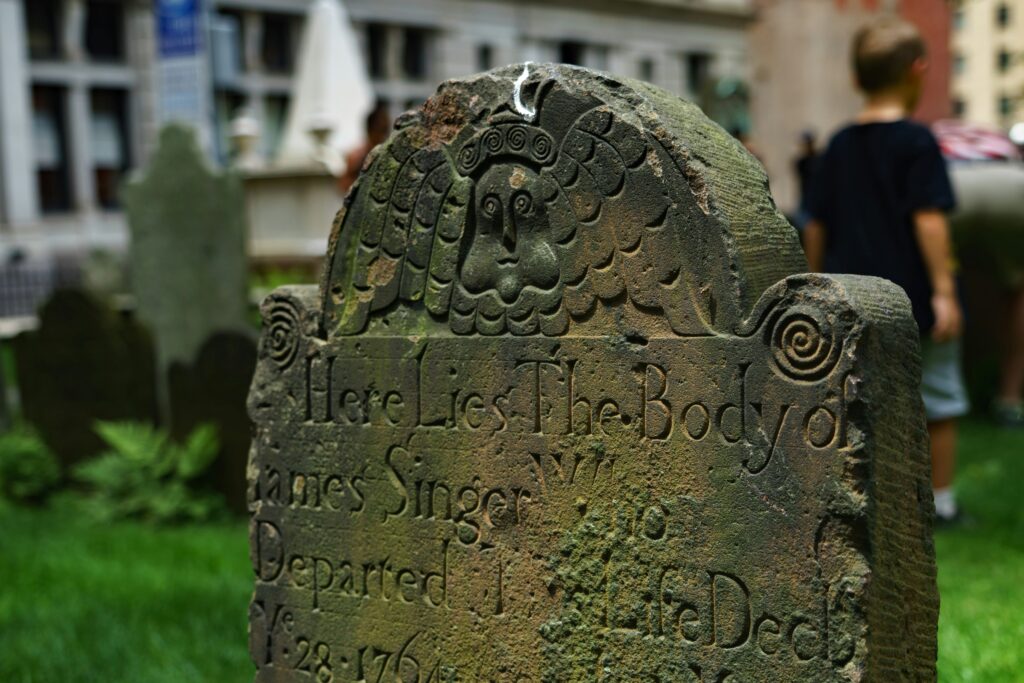
What Makes an Epitaph Meaningful?
A meaningful epitaph is one that reflects the essence of a person’s life and offers comfort to those who remember them. It may be poetic, spiritual, or simple—but above all, it feels true.
Though often brief, a well-chosen epitaph can carry deep emotional weight. It may:
- Honor a loved one’s spirit – Reflecting who they were, what they believed, or how they lived
- Offer comfort to the living – Speaking gently to those who return to visit and reflect
- Express values or faith – Whether through sacred text, poetry, or personal phrases
- Create a lasting presence – A few words that endure, etched in stone or in memory
The tone may be:
- Poetic or personal
- Spiritual or secular
- Traditional, creative, or even quietly humorous
However it’s written, a meaningful epitaph becomes a lasting expression of love and remembrance.
How To Write an Epitaph
To write an epitaph, begin by reflecting on what mattered most to the person being remembered, and what message might live on in their absence. Epitaphs are often very short and simple.
Here are five helpful tips to guide the writing process:
1. Begin with what mattered most
Focus on one central truth about who they were. This could be a defining trait, a core value, or the way they showed up in the lives of others. Were they known for their unwavering faith? Their generosity? A quiet strength? A deep love for family? Let the inscription reflect what was most essential to them—or to those who loved them.
Examples:
- “Beloved mother and devoted friend”
- “He lived with kindness and quiet strength”
2. Keep it brief
Most epitaphs are just one to four lines. A single phrase can carry deep meaning. You might include a role they cherished—such as mother, daughter, friend—or reference their faith, sense of humor, or a guiding belief. The brevity is part of the beauty: a few words, chosen with care, may speak volumes.
Examples:
- “Forever in our hearts”
- “She made the world brighter”
3. Choose your tone
Think about the energy they brought into the room, how they made others feel, or how they’d want to be remembered. The tone might be spiritual, poetic, heartfelt, or even gently humorous—whatever feels most true to their presence.
Examples:
- “At peace in God’s care”
- “She loved deeply and laughed often”
- “Gone to her next great adventure”
4. Look for inspiration
If the right words don’t come immediately, turn to the voices that moved them—or that move you. Scripture, poetry, literature, music, or a favorite saying can all offer language that speaks to the heart. Consider a line from a hymn they loved, a passage from a novel they returned to, or a lyric that always made them smile. You might also draw from prayers, proverbs, or even something they often said themselves. These borrowed words can become a deeply personal tribute when they reflect the spirit of the person you’re honoring.
Examples:
- “The Lord is my shepherd” – Psalm 23
- “And flights of angels sing thee to thy rest” – Shakespeare
- “All you need is love” – The Beatles
5. Read it aloud
Speaking the words out loud can help you feel whether they hold the right tone. Do they bring a sense of peace, clarity, or quiet recognition? You might choose to read the epitaph to someone close to you for another perspective, or you may prefer to sit with it alone and make your own decision in your own time. There’s no best practice, only what feels most respectful and meaningful. If the words make you feel love, connection, or a deep sense of remembrance, they may be the ones to choose.
If you’re unsure where to begin, these prompts may help:
- What do you hope they’ll be remembered for?
- What brought them peace, joy, or purpose?
- What phrase or quote did they love—or live by?
- What message would they want to leave for those still living?
- What made them uniquely them?
- What simple truth captures who they were?
Timeless Examples for Inspiration
Reading existing epitaphs can help you find language that resonates—whether poetic, spiritual, or gently witty. Here are examples across three distinct vibes:
Literary & Poetic
Ideal for those drawn to verse or reflective phrasing:
- “Because I could not stop for Death – He kindly stopped for me” — Emily Dickinson
- “Do not go gentle into that good night” — Dylan Thomas
- “Here lies one whose name was writ in water” — John Keats
Biblical & Spiritual
Comforting expressions of faith or sacred connection:
-
- “The Lord is my shepherd; I shall not want” — Psalm 23
“Free at last, Free at last, Thank God Almighty I’m Free at last” — Martin Luther King Jr.
- “The Lord is my shepherd; I shall not want” — Psalm 23
- “May his (her) soul be bound in the binding of life.” — Traditional Jewish epitaph
Funny & Clever
For a lighthearted tribute that reflects personality:
- “Excuse my dust” — Dorothy Parker
- “That’s all folks!” — Mel Blanc
- “I’ll never get out of this world alive” — Hank Williams
Planning a Memorial? We’re Here to Help
Whether it’s a line of poetry, a verse of scripture, or a simple phrase spoken from the heart, an epitaph may carry meaning long after the moment of farewell. If you’re navigating end-of-life planning or honoring the memory of someone dear, Hollywood Forever is here to support you.
