
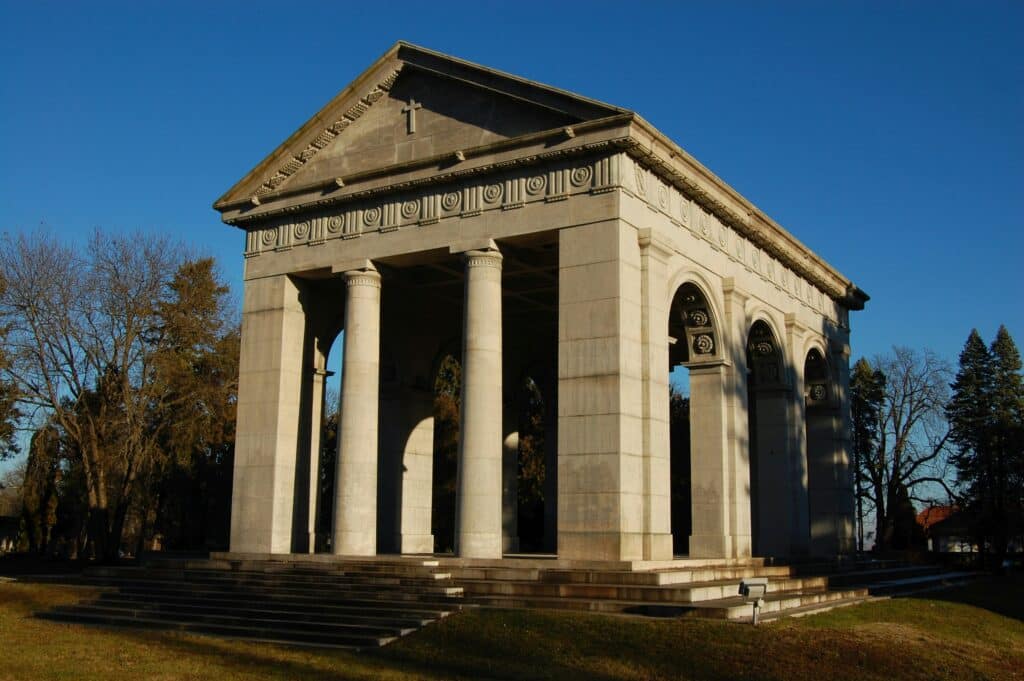
The Timeless Tradition of Mausoleums
Mausoleums have been part of human culture for more than two thousand years. The very word comes from the Mausoleum at Halicarnassus, a monumental tomb built in the 4th century B.C. in what is now Bodrum, Turkey. It was commissioned for Mausolus, a ruler of Caria, by his wife Artemisia, and became so renowned for its scale and beauty that it was later named one of the Seven Wonders of the Ancient World.
Since then, societies across the globe have turned to mausoleums as enduring places of honor, designed to withstand time and preserve memory. Some were built for emperors and kings, while others became shared community spaces where many families could remember their loved ones together.
Despite differences in style or scale, each has reflected the same intention: to provide permanence, dignity, and a place where memory could live on. Today’s mausoleums continue that tradition. Constructed from strong materials such as granite and marble, they serve as lasting memorials while offering families a serene space to visit and reflect.
Why Families May Choose Mausoleum Burial
Mausoleums may appeal to families for a variety of reasons, offering both practical benefits and meaningful qualities. Some of the most common considerations include:
- Permanence: Built from durable materials such as granite or marble, mausoleums are designed to endure for generations, providing lasting peace of mind.
- Comfort in visitation: Sheltered interiors or covered spaces allow families to visit in any season, offering quiet reflection away from the elements.
- Architectural beauty: Many mausoleums are carefully designed, from traditional stonework to modern light-filled spaces, creating a dignified environment for remembrance.
- Family legacy: Mausoleums may serve as a central place of honor, allowing future generations to gather and remember together.
- Efficient use of space: In cities where cemetery land is limited, mausoleums offer a thoughtful alternative to traditional ground burial.
For many families, these qualities combine to make mausoleum burial a meaningful choice.
Types of Mausoleums
Mausoleums may vary in size, style, and purpose, giving families several options to consider. The main types include:
- Community mausoleums: Large, shared buildings located within cemeteries. These contain many crypts for caskets and often niches for urns. Because they serve many families, they are typically more accessible and can be a practical option in urban areas. Hollywood Forever’s Gower Mausoleum in Los Angeles is an example of a modern community mausoleum.
- Private or family mausoleums: Custom-built for a single family, these provide an exclusive space that may be personalized with architectural details, stained glass, or inscriptions. They often accommodate both caskets and urns.
- Columbaria: A type of mausoleum designed for holding urns of loved ones honored through cremation. Columbaria contain only niches—smaller compartments built to hold the urns—and may be located inside a larger community mausoleum or as a standalone structure.
- Walk-in vs. non-walk-in mausoleums: Some mausoleums are designed as small buildings that allow families to step inside and spend time in quiet reflection, while others are viewed from the outside, with crypts or niches sealed along the walls.
Each type offers its own balance of privacy, accessibility, and personalization, giving families the opportunity to choose the option that best reflects their wishes.
Frequently Asked Questions About Mausoleum Burial
When families begin considering mausoleum burial, certain questions often arise. Here are some of the most common:
Is a mausoleum permanent?
Yes. Mausoleums are built from strong, lasting materials such as granite or marble. They are designed to provide a permanent place of rest for generations.
How does the cost of a mausoleum compare to ground burial?
Mausoleum spaces may be similar in cost to premium ground burial options, and in some cases may be higher depending on the location and type of crypt or niche. Because costs vary, families should speak directly with the cemetery or funeral home to better understand the options available.
Can urns be placed in a mausoleum?
Yes. Many mausoleums include dedicated niches for urns, sometimes within a columbarium space.
What personalization is possible when choosing a mausoleum?
Personalization may depend on the type of mausoleum chosen, whether it is a private or family mausoleum or a community mausoleum, and the specific rules or requirements of the cemetery.
Generally speaking, in a community mausoleum, families may select custom inscriptions, bronze or stone plaques, and sometimes decorative elements such as stained glass or statuary. These details allow each crypt or niche to be marked with dignity and individuality, even within a shared space.
Private or family mausolea may be an option, and are typically custom-built and can reflect a family’s unique vision, with architectural features, interior design, and artwork tailored to their wishes. A family mausoleum may serve as a central place of honor for multiple generations, combining permanence with a deeply personal sense of legacy.
Are there mausoleums in Los Angeles?
Yes. Hollywood Forever is home to some of the nation’s most historic mausoleums, such as the Cathedral Mausoleum and the Abbey of the Psalms, as well as newer spaces like the Crescent Mausoleum. The recently built Gower Mausoleum is the largest of its kind in the United States, featuring 25,000 crypts and niches, rooftop gardens, and an open-air chapel.
If your family is considering mausoleum burial, Hollywood Forever can provide a variety of choices, from shared spaces to private family mausoleums. We invite you to explore the options and learn more about how these lasting places of remembrance can honor your loved ones by contacting one of our dedicated counselors.
